
Shetland Islands Guide

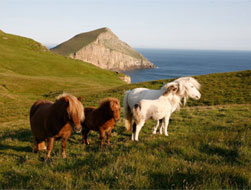
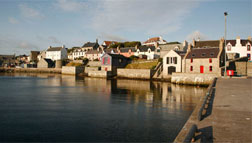 The Shetland Islands share a similar history as Orkney; they were annexed by Scotland in the same year (1468). Shetland also has its share of Norse history and Neolithic findings. Lerwick is the only town on the islands and the most northerly town in Britain. It is the main harbour and the ferry terminal serves routes to Kirkwall and Aberdeen, as well as the Faroe Islands and Iceland. It is a stop on most northern cruise routes. The water has long been a part of life here, with approximately 900 miles of coastline — the furthest point from the coast is only 3 miles from anywhere on the islands. Discover the fascinating natural environment, a haven for wildlife watchers, with otters, puffins, orcas and, on some of the remote islands, wild Shetland ponies.
 Shetland dates back to prehistoric times, about 3000 years, so there is an abundance of sites and visitor centres. On the Mainland in Lerwick on the edge of the loch is the Broch of Clickimin, a preserved farmhouse from the Bronze Age (about 1000 BC). The area was excavated in the 1950s, revealing various phases on show today, including the blockhouse (defence tower) inside the gates. The Mousa Broch is one of the most well‑preserved brochs in Scotland. Standing on the uninhabited island of Mousa, the broch rises to 13m high. The isle of Mousa has a croft operating as a bird sanctuary near the ferry port. Jarlshof and Scatness are among other remarkable archaeological sites to see.
 Other historical sights and monuments to visit include the Scalloway Museum, Shetland Museum in Lerwick, Shetland Crofthouse Museum, and Scalloway Castle. For more information on the Shetland Islands download a tourist brochure.
Photo Credits: Paul Tomkins, VisitScotland