
Outer Hebrides Guide

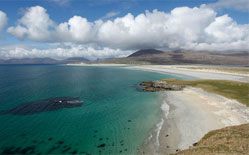 The Outer Hebrides are a chain of islands off the western coast of Scotland. The main islands are Lewis, Harris, North Uist, Benbecula, South Uist and Barra. The islands boast natural beauty with superb deserted beaches and a mountainous backdrop. In history the island was at one time occupied by Norse Vikings for 200 years until the Scottish claimed it back after a dispute with the King of Norway and the Battle of Largs in 1263. The culture of the island remains the heartland of Scottish Gaelic and is the main language spoken by their inhabitants.
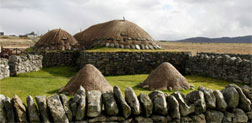
 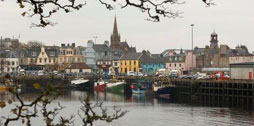 Lewis is the largest of the islands and the hub since it has the only town in the Western Isles. Stornoway is the main port where you will find all the main means for touring the island, with guided tours, cruises and accommodations. The Isle of Lewis itself has a variety of tourist attractions. In the village of Arnol, on the north west side, is the Blackhouse Museum displaying how life once was on the island with old stone cottages and a visitors centre. Close by is the Shawbost Norse Mill; a reconstructed Norse mill and kiln that was used from 1816 to 1945. In Gearrannan are a group of the Village Blackhouses, a restored example of village life and houses dating back to the 1800s. In Calanais are a group of standing stones said to date back to the year 2000 BC. Along the coast there are many secluded beaches and old sea ports.
 Harris, from the old Norse meaning high land, is not actually a separate island; it is divided from Lewis by a high mountain range. Beyond the mountains are some of the best beaches in Scotland with the clear blue waters of the Atlantic Ocean. Tarbert is the main village and ferry terminal serving routes to Uig in North Skye. In the south there is a small fishing village named Leverburgh which has a ferry service to the southern islands of Berneray and North Uist. Near Leverburgh is the medieval St Clement's Church, built in 1520 by Alexander MacLeod of Dunvegan and Harris. In Plocrapol is the Harris Tweed and Knitwear family‑run company where visitors can see hand weaves made the traditional way. About two miles off the west coast is the deserted island of Taransay which was used in the reality TV series *Castaway 2000*.
 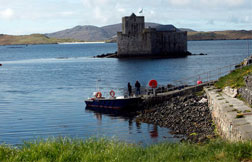 The southern islands of the Outer Hebrides — North Uist, Grimsay, Benbecula, and South Uist — are all linked by causeways. The islands are sparsely populated, made up mainly of single‑lane roads, small fishing villages, unspoiled beaches and rocky hills. In Lochmaddy on North Uist there is a ferry terminal that has routes to Uig on Skye. South Uist is the second largest island of the Outer Hebrides. Castlebay is a pretty town on Barra with a view of a great looking small castle on the bay; Kisimul Castle is on an island just off the coast, the settlement dating back to the 12th century. Dominating the town is The Church of Our Lady Star of the Sea, built in 1886, which is the first thing seen when entering the harbour. Barra has a unique airport in which the main runway is on the sandy beach. The Barra Heritage in Castlebay exhibits the life and the people in Barra and Vatersay; for more details visit the website.
 Forty miles off the west coast is the deserted island of St Kilda. The island was once populated by a unique culture with a close‑knit stone house community. By 1930 the island was abandoned but the ruins of the houses can still be seen. Cruises do stop on St Kilda with time to explore; also the island is close to much seabird life. For more details visit the website.
If you are planning a visit to the Outer Hebrides you can order a tourist brochure for more details.
Photo Credits: Paul Tomkins/VisitScotland