
A Walk Through Edinburgh Castle: Top Sights You Can't Miss


Perched high on Castle Rock, Edinburgh Castle is one of Scotland’s most iconic landmarks. Whether you're a history lover or just looking for great views, this fortress offers a deeper look into the country’s dramatic past. Let's take a walk through this historic site and explore its must-see sights, from medieval defenses to royal treasures.
1. The Esplanade: Gatehouse, Guardians of Scotland Statues, Coat of Arms, and Half Moon Battery
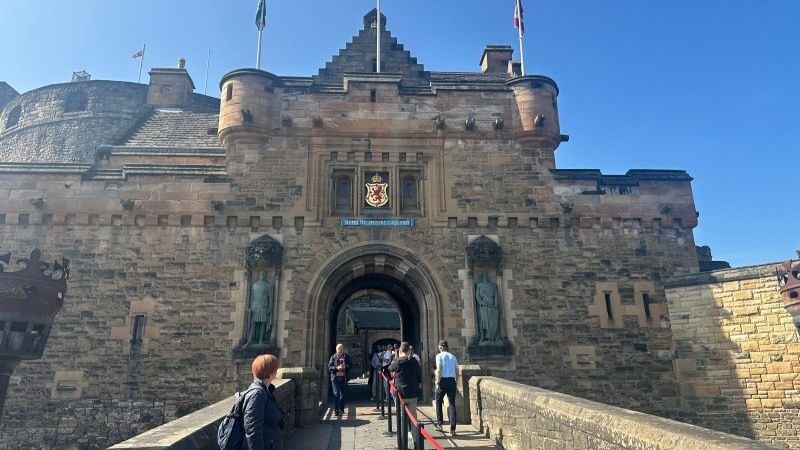
Your journey begins at the Esplanade, the wide open space that leads up to the castle. The first thing you’ll notice is the Gatehouse, a massive stone entrance that once protected the castle. Flanking the entrance are the Guardians of Scotland statues; Robert the Bruce and William Wallace, two of Scotland's most legendary figures. These statues honor their roles in the fight for Scottish independence, standing as proud symbols of the nation’s resilience.
Above the gate, you’ll spot the Coat of Arms and the national motto, "Nemo me impune lacessit" ("No one attacks me with impunity"). This motto has long been associated with the castle, encapsulating its role as a fortress of strength. Don’t miss the Half Moon Battery, a key defensive structure built after the Lang Siege in 1571, which was one of the most destructive sieges in Scottish history. The original David’s Tower, which was destroyed during this siege, was rebuilt to strengthen the castle’s defenses, making the Half Moon Battery one of the castle’s most significant military features.
2. Portcullis and Iron Gate: The Medieval Entrance
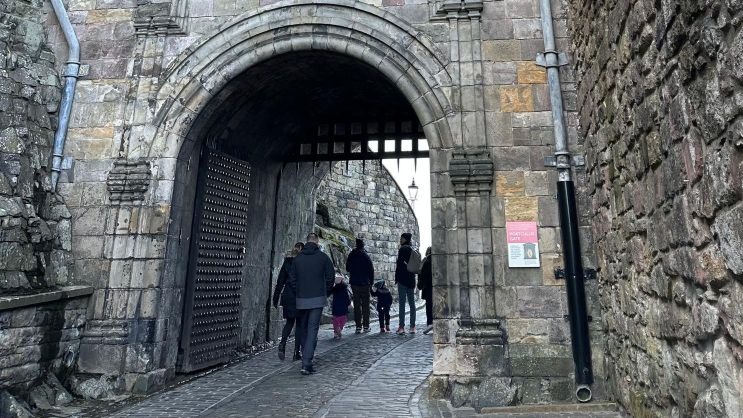
Next, make your way through the Portcullis and Iron Gate, the medieval entrance built in the 1500s by King James V. This was the main entrance to the castle during the medieval period and was designed for defense. On either side, you'll find solid oak doors, and in the centre, a heavy iron counterlever gate that could be lowered in a matter of seconds. Back in the day, visitors would have been locked inside the Gatehouse and questioned about the purpose of their visit. If the wrong answer was given, the portcullis would be lowered mid-sentence, trapping the visitor!
Today, thankfully, the gate is a replica, and we welcome all visitors with open arms. But the atmosphere of those tense medieval days is still felt as you pass through this historic entrance.
3. Argyle Battery: One O’Clock Gun and Thomas Randolph
Passing through the Iron Gate, you enter the Argyle Battery, a crucial area in the castle’s history. Here, you’ll find a plaque commemorating Thomas Randolph, the Earl of Moray. Randolph famously took the castle by sneak attack during the Wars of Independence in the 14th century, securing it for Scotland after a period of English occupation.
As you wander further, you’ll also encounter the One O’Clock Gun, a daily tradition that’s been part of the castle’s history since 1861. Fired every day (except Sundays), this cannon was originally used to signal time for sailors in the harbor, but today, it remains a beloved part of the city’s rhythm.
4. Foogs Gate: Views of the Firth of Forth, Leith, and Fife, Regimental Museums, and Prisoners of War Exhibits
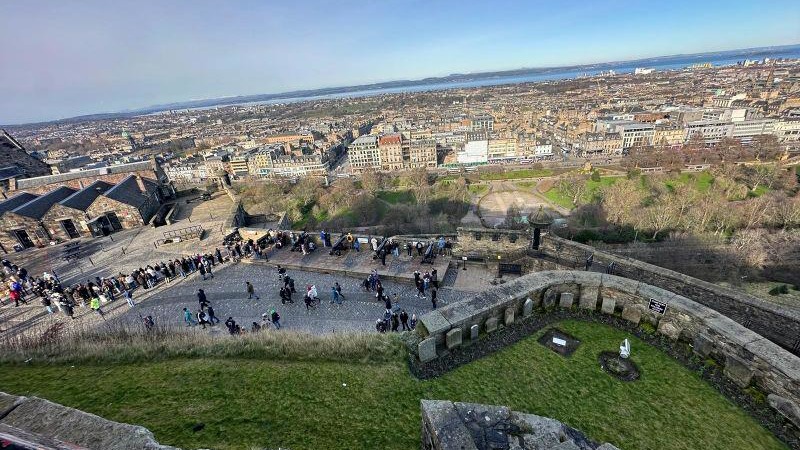
Head towards Foogs Gate, where you’re greeted with some of the best views in Edinburgh. From here, you can take in the spectacular views of the Firth of Forth, Leith, and the rolling hills of Fife across the water.
Nearby, don’t miss the Regimental Museums, which offer a fascinating look at Scotland's military past. From the Jacobite Risings to the World Wars, the exhibits here are packed with stories and artifacts that bring Scotland’s history to life.
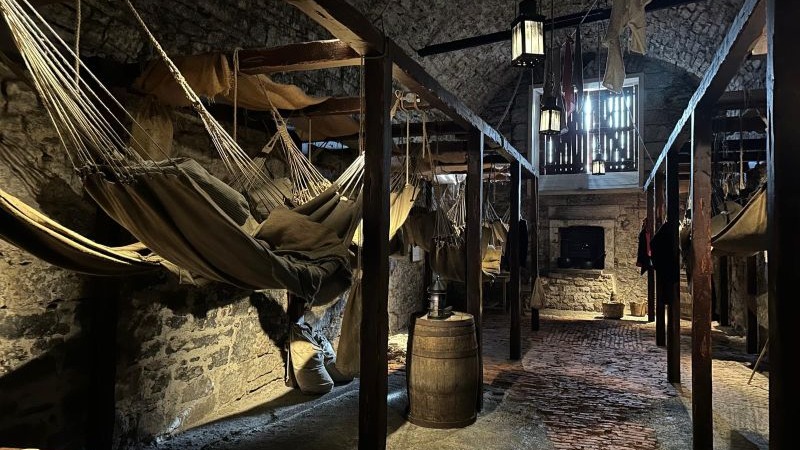
The Prisoners of War (POW) Exhibition is another must-see. This exhibit focuses on the soldiers who were held in the castle throughout the centuries, including French POWs during the Napoleonic Wars and American prisoners during the Revolutionary War. One of the most intriguing features of the POW prison is a wooden door with an American flag carved into it.
5. St Margaret’s Chapel, Mons Meg, Signal Basket, Whisky Shop, and Dog Cemetery
St Margaret’s Chapel is the oldest surviving building in Edinburgh, built in the early 12th century by King David I in honour of his mother, St Margaret. After centuries of wear, it was sensitively restored in the 1850s under Sir Daniel Wilson, who helped return it to its medieval character. The later stained‑glass windows by Douglas Strachan, depicting St Margaret and other Scottish saints, give the tiny interior a warm, intimate atmosphere. Today, the chapel is still in active use and is one of the few places within the castle where weddings and christenings can be held, making it both a historic landmark and a living part of the site.
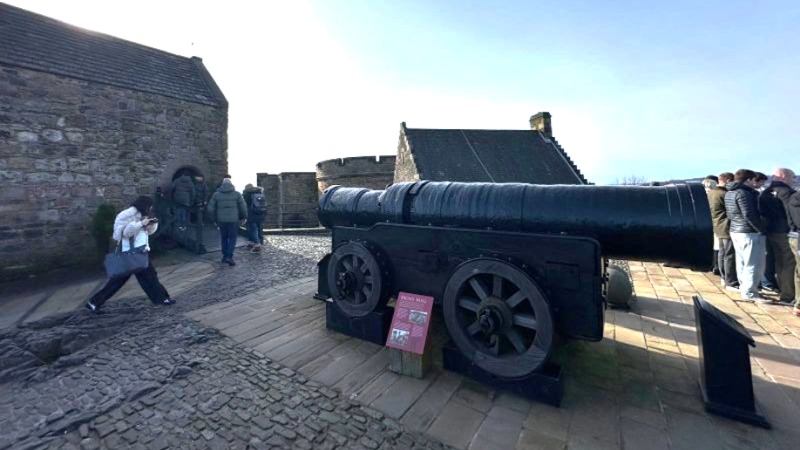
Mons Meg, completed in 1449, is one of Europe’s most impressive surviving medieval bombards. Gifted to King James II, the six‑ton cannon could fire massive stone balls over a mile, making it both a formidable siege weapon and a powerful symbol of royal authority. Its service ended in 1681 when the barrel burst during a ceremonial firing, but it has remained at the castle ever since, standing as a striking reminder of 15th‑century military engineering.
6. Crown Square: Great Hall, Queen’s Apartments, War Memorial, Afternoon Tea
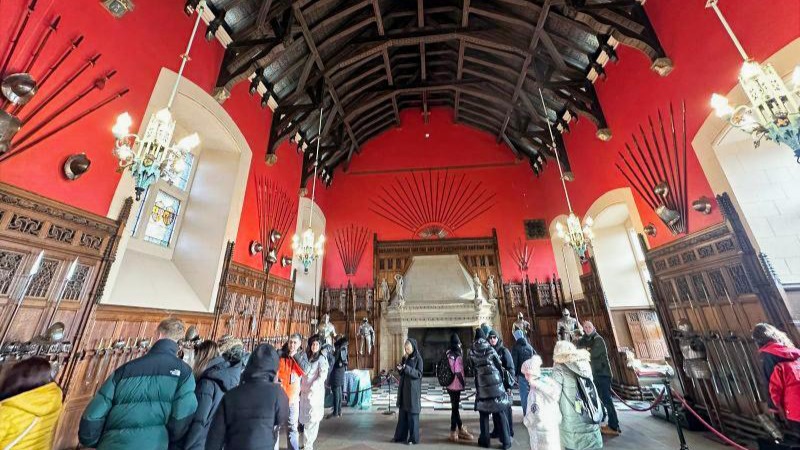
Your final stop in the castle is Crown Square, the highest and most historic part of the fortress. At its centre stands the Great Hall, completed in 1511 for James IV. Its hammerbeam roof is one of the finest in Scotland, built without nails and designed to impress visiting nobles and foreign ambassadors. The hall served as a ceremonial space for the Scottish court, and it was here in 1503 that James IV celebrated his marriage to Margaret Tudor, a union that would eventually link the Scottish and English crowns.
Across the square are the Royal Apartments, including the rooms where Mary, Queen of Scots gave birth to James VI in 1566. His birth would later prove pivotal: when Queen Elizabeth I died without an heir in 1603, James inherited the English throne as James I, uniting the crowns and extending the Stuart line from Scotland into England. The chambers are modest in size but rich in symbolism, offering a glimpse into the private world of the Scottish monarchy at a turning point in the nation’s history.
On the opposite side of the square stands the Scottish National War Memorial, opened in 1927 as a tribute to those who lost their lives in the First World War and later conflicts. Its interior is quiet and contemplative, with carved stone, stained glass and regimental emblems honouring the fallen. It remains an active place of remembrance, used by serving personnel and visitors alike.
If you’re ready for a break after exploring the upper levels, the Tea Room nearby offers a calm spot to sit down and enjoy afternoon tea before you make your way back through the castle.
7. The Crown Jewels
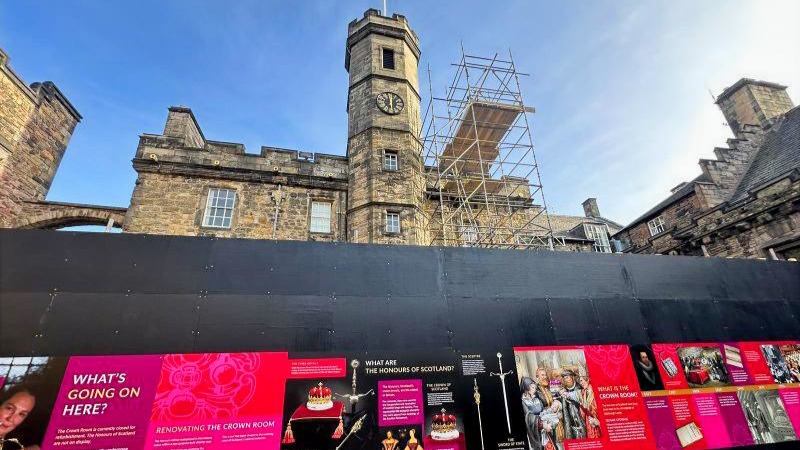
Don’t miss the Crown Jewels, the Honours of Scotland, the oldest surviving royal regalia in Britain. Created between the late 1400s and early 1500s, they were crafted for the coronations of Scotland’s monarchs and remain some of the finest examples of Renaissance artistry in Europe.
The Crown of Scotland; Remade in 1540 for James V, the crown is fashioned from Scottish gold and set with pearls, amethysts, garnets, and large red spinels once believed to be rubies. Its weight and intricate detailing were designed to project royal authority and the independence of the Scottish crown.
The Sword of State; Presented to James IV in 1507 by Pope Julius II, the sword features a finely etched blade and a hilt decorated with gold filigree and polished rock crystal. It symbolised the monarch’s duty to uphold justice and protect the realm.
The Sceptre; Gifted to James IV around 1494, the sceptre is made of silver gilt and topped with miniature carved figures of saints. Its detailed enamel work and gold leaf decoration reflect strong European influences on Scotland’s royal court.
These treasures survived centuries of conflict and political upheaval. After the Union of the Crowns, they were locked away and largely forgotten until their dramatic rediscovery in 1818 by Sir Walter Scott, who brought them back into public view and national pride.
NOTE: The Crown Jewels exhibition is currently being refurbished and reopens in June with refreshed displays and interpretation.
Frequently Asked Questions about Edinburgh Castle
Most visitors spend between 2 to 3 hours exploring the castle. However, if you're short on time, it’s possible to see the main highlights in 1 to 1.5 hours. Be sure to check out the Crown Jewels, the Great Hall, and enjoy the stunning views. If you’re a history enthusiast or want to explore in more detail, plan for a longer visit.
Edinburgh Castle is located on a steep hill, and while the site is not fully wheelchair accessible due to its incline, there are some options for visitors with mobility needs. You can take a taxi up to the Esplanade, and from there, there's a mobility service car available to take you closer to the entrance. Please note that space for the mobility service is limited, so it's a good idea to arrange this in advance with the castle. For more detailed information on accessibility, it's best to check the official website before your visit.
The busiest time at the castle is early in the morning when it first opens. For a quieter experience, aim to visit around 2 hours before closing. Alternatively, if you're interested in seeing the daily One O'Clock Gun, plan your visit around that time.
While photography is allowed throughout most of the castle, there are some restrictions. Photos are not permitted inside the Crown Jewels exhibition or the War Memorial to preserve the integrity of these important artifacts. However, you are welcome to take pictures in other areas of the castle, including the Great Hall, St Margaret’s Chapel, and the surrounding courtyards.
Ticket prices vary, so it's a good idea to check the castle’s official website for the most up-to-date pricing information. You’ll find details on general admission as well as any discounts for students, seniors, and children. There are also special family and group ticket options available.
Parking at Edinburgh Castle is limited. Access to the Esplanade is restricted to taxis and castle staff only. Visitors must walk up from the Lawnmarket area, taking the path up Castlehill. If you're planning to visit, be prepared for a bit of a climb, but it's well worth it for the stunning views once you reach the top!
Yes, there are a couple of dining options at the castle. The Tea Room offers waiter service and a more relaxed dining experience, but it’s recommended to book in advance. For a quicker bite, head to the Red Coat Café, which serves cafeteria-style food with a variety of snacks and light meals.
Go Scotland Top Tours
-
 Scheduled group tour
Loch Ness, Glencoe and Scottish Highlands Day Tour Experience from Edinburgh
Experience the best 1 day tour of Scotland, we go to the famous Loch Ness and Scottish Highlands, see the rich mountain scenery as you tour on the Nessie Bus... -
 Scheduled group tour
Loch Lomond, Whisky, and Stirling Castle Tour Experience from Edinburgh
Day Tour to Loch Lomond Tour and Stirling Castle from Edinburgh, including a Whisky stop at Clydeside Distillery. Castles, lochs and whisky, a perfect day out. -
 Scheduled group tour
Tour Loch Ness, Inverness and the Highlands of Scotland
Take two leisurely days, travel in comfort in a small group tour of Scotland and savour delights of the Scottish Highlands and Loch Ness with your tour guide... -
 Scheduled group tour
Islay Whisky Adventure Tour
This tour takes you away to Scottish island paradise of Islay. Stunning scenery, ancient history, traditional culture and 8 Scotland finest whisky distilleries.